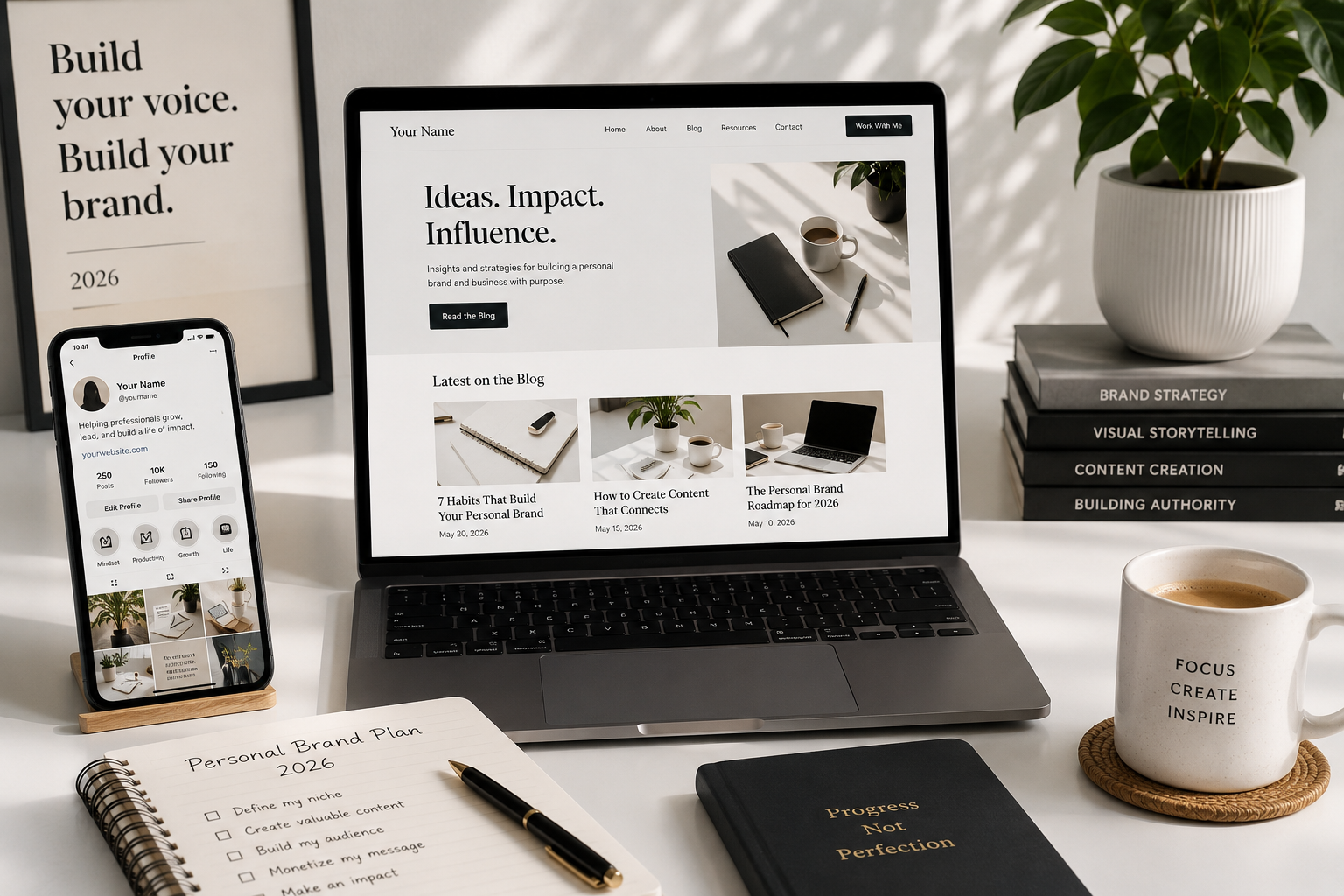
Let me ask you something honest.
When someone searches your name online right now, what do they find?
If the answer is nothing — or worse, something completely unrelated to what you do — then you are leaving real money on the table. Not because you are not talented. But because nobody knows you exist.
That is what a personal brand fixes.
A personal brand is not about being famous. It is not about having millions of followers or going viral on TikTok. It is not about pretending to be someone you are not.
It is simply about being known by the right people — the people who would hire you, buy from you, collaborate with you, or recommend you to others. And in 2026, building that kind of presence online has never been more accessible or more valuable.
This guide is going to show you exactly how to do it — from scratch, with no budget, and no prior experience required.
What Is a Personal Brand and Why Does It Matter in 2026?
A personal brand is the impression people form about you when they encounter your name, your content, or your work online. It is the answer to the question: what do people think of when they think of you?
Think about it this way. If someone in your industry needs a freelance writer, a marketing consultant, a web designer, or an online business coach — and your name comes to mind before anyone else — that is your personal brand working for you.
In 2026, personal branding matters more than it ever has before. Here is why.
The job market has changed dramatically. Remote work is now the norm across entire industries. Freelancing has exploded. Side hustles are mainstream. And in a world where your competition is global — not just the person down the street — the people who stand out are the ones who have built a recognizable presence online.
Employers search candidates online before interviews. Clients research service providers before hiring. Readers decide whether to trust a blogger within seconds of landing on their site. Your personal brand is what determines whether those searches and first impressions work in your favor or against you.
And here is the most exciting part. A strong personal brand compounds over time. Every article you write, every post you publish, every project you complete in public — it all stacks up. A year from now, the person who started building their brand today will be miles ahead of the person who kept waiting for the right moment.

Step 1: Get Clear on Who You Are and Who You Serve
Before you write a single post, design a single graphic, or create a single profile — you need to answer two questions.
The first question is: what do you want to be known for?
Not what you think sounds impressive. Not what is trending right now. What do you genuinely know, care about, or have experience with — that could help someone else?
You do not need to be the world’s leading expert. You just need to know more than the person you are trying to help. A person who learned to manage their finances after years of debt knows more than someone who is just starting. A person who built a successful Etsy shop knows more than someone who has never tried. That knowledge is valuable — and it is the foundation of your personal brand.
The second question is: who exactly are you trying to help?
This is where most beginners make a critical mistake. They try to appeal to everyone. They want their brand to be broad enough to attract as many people as possible. But the opposite is true. The more specific you are about who you serve, the easier it is for the right people to find you — and trust you.
A personal brand built around helping “people who want to make money online” is too vague. A personal brand built around helping “beginners in the USA who want to earn their first $500 online using free AI tools” is specific, clear, and immediately valuable to the exact right person.
Take some time with these two questions before you move forward. Everything else you build will rest on these answers.
Step 2: Choose Your Platform — Where Will You Show Up?
One of the biggest mistakes beginners make with personal branding is trying to be everywhere at once. They start a blog, open a Twitter account, create a LinkedIn profile, launch an Instagram page, and start a YouTube channel — all in the same week. Six months later, they have made no real progress on any of them because their attention was spread too thin.
In 2026, the right approach is to pick one primary platform, commit to it fully, and expand only after you have built a real presence there.
Here is how to choose the right platform for your brand.
A blog or website is the best foundation for any personal brand. It is the one place online that you own completely — no algorithm can reduce your reach, no platform can shut you down, no policy change can erase your content. A blog like EarnGuide is a perfect example. Every article you publish builds your authority, drives search traffic, and gives people a place to learn from you in depth.
If you are building a personal brand around online earning, AI tools, freelancing, or any knowledge-based niche — a blog is your most powerful long-term asset.
LinkedIn is the most underrated platform for personal branding in 2026. It is where professionals, decision-makers, and business owners spend their time. If your goal is to attract clients, land consulting work, or be seen as an authority in your field — LinkedIn is where that happens faster than anywhere else.
Pinterest is exceptional for driving traffic to your blog. It works like a visual search engine, meaning the content you post today can still bring visitors to your site two or three years from now. If you are already running a blog, Pinterest should be your primary social platform for growth.
Twitter/X is where real-time conversations happen. It is excellent for building relationships with other creators, getting feedback on your ideas, and growing a following among people who are interested in what you think and say.
YouTube is the second largest search engine in the world and one of the most powerful platforms for building trust. Video lets people see your face, hear your voice, and feel like they know you — which accelerates trust faster than any other format. If you are comfortable on camera, or willing to build a faceless channel, YouTube is worth serious consideration.
For most beginners in 2026, the winning combination is a blog as your home base, Pinterest for traffic, and one social platform for building relationships. Start there. Do not overcomplicate it.

Step 3: Create Content That Actually Builds Your Brand
Content is the fuel of your personal brand. Without consistent, valuable content — your brand does not grow. But not all content is created equal.
Here is the difference between content that builds a personal brand and content that gets ignored.
Content that builds a brand is specific, honest, and useful. It teaches something, solves a problem, shares a real experience, or offers a perspective the reader has not considered before. It sounds like a real human being — not a press release, not a listicle generated in thirty seconds, not a collection of vague advice that applies to everyone and helps no one.
Content that gets ignored is generic. It covers the same ground as ten thousand other articles. It offers no real opinion, no personal story, no specific insight. It is forgettable within thirty seconds of reading.
The bar for content quality in 2026 has risen significantly. AI tools have made it easy to produce large volumes of content quickly — which means the internet is now flooded with mediocre, interchangeable articles. The personal brands that stand out are the ones where a real human perspective is visible in every piece of content they create.
Here is how to make your content genuinely valuable.
Write from experience whenever possible. If you are sharing advice about freelancing, share what actually happened when you tried it. If you are reviewing a tool, share what you genuinely liked and what frustrated you. Real experience — even limited experience — is more valuable than polished advice that sounds like it came from a textbook.
Be honest about what you do not know. Counterintuitively, admitting limitations builds more trust than pretending to have all the answers. Readers can tell the difference between someone who has genuinely tested something and someone who is just summarizing what they read elsewhere.
Take a clear position. Wishy-washy content that tries not to offend anyone is boring. The personal brands people remember are the ones that say something specific — even if not everyone agrees with it.
Publish consistently. One piece of content per week, published reliably for a year, will build a stronger personal brand than ten pieces published in one month and then nothing for six months. Consistency signals reliability — and reliability is the foundation of trust.

Step 4: Build Your Online Presence — The Practical Setup
Once you know what you want to be known for and where you want to show up, it is time to set up your actual online presence.
Here is what that looks like in practice.
Your website or blog should be the centerpiece. Choose a clean, professional theme. Write a clear homepage that tells visitors exactly who you are, who you help, and what they will find on your site. Make sure your About page tells your story in a way that feels real and human — not like a corporate biography.
Your blog name and domain should be simple, memorable, and ideally include keywords related to your niche. earnguide1.com is a strong example — it is clear, descriptive, and immediately tells visitors what the site is about.
Your social media profiles should be consistent. Use the same name, the same profile photo, and the same short bio across every platform you use. When someone finds you on Pinterest and then searches for you on LinkedIn, they should immediately recognize that it is the same person.
Your bio should answer three questions in two sentences or less. Who are you? Who do you help? What can they expect from following you? Something like: “I help beginners make their first income online using free AI tools and practical strategies. Follow for honest guides that actually work.”
Your profile photo matters more than most people realize. It does not need to be a professional headshot. But it should be clear, well-lit, and look like someone a stranger could trust. A blurry selfie from three years ago is not doing your brand any favors.
Step 5: Build Your Audience — How People Actually Find You
Creating great content is only half the equation. The other half is making sure people actually see it.
Here is how personal brands grow in 2026.
Search engine optimization is the most sustainable long-term traffic source. When you write articles that target specific keywords people search for on Google — and when those articles are genuinely helpful — your site climbs in search rankings over time. Every article you publish is a potential entry point for a new reader discovering your brand for the first time.
Pinterest is the fastest free traffic source for bloggers and content creators. A well-designed pin linked to a quality article can bring hundreds of readers to your site within days of posting — and continue bringing traffic for years afterward. The key is consistency: post new pins regularly and make sure every pin links back to something valuable on your site.
Collaborations and guest posts are one of the most underutilized growth strategies for personal brands. When you write a guest article for another blog in your niche, or collaborate with another creator on a piece of content, you get introduced to their entire audience. Even one good collaboration can bring hundreds of new readers to your site.
Email list building is something most beginners ignore until it is too late. Your email list is the only audience you truly own. Social media platforms change their algorithms. Search rankings fluctuate. But an email list stays with you. Start collecting emails from day one — even if it is just a simple signup form on your blog — and you will be grateful you did a year from now.
Step 6: Make Money from Your Personal Brand
This is the part that makes all the effort worthwhile. Here is how personal brands generate real income in 2026.
Freelancing and consulting is often the fastest path to income for a new personal brand. Once people know you as someone who understands a particular topic — online marketing, content creation, social media management, AI tools — they will pay for your expertise. Clients hire people they trust, and trust is built through consistent, visible personal branding.
A blogger who writes detailed articles about social media marketing for small businesses will naturally attract small business owners who want to hire someone with that knowledge. The blog is not just content — it is a portfolio and a trust-building machine.
Sponsored content and brand partnerships become available as your audience grows. Brands in your niche will pay you to review their products, mention their services, or create content that reaches your audience. Even creators with relatively small but highly engaged audiences can earn meaningful money from brand deals — especially in niches where the audience has strong purchasing intent.
Digital products are one of the highest-margin income streams available to personal brand creators. Once you have an audience that trusts your expertise, you can sell ebooks, templates, courses, or guides — products you create once and sell indefinitely. The beauty of digital products is that your personal brand does the selling for you. People buy from creators they already trust.
Affiliate marketing is a natural fit for any personal brand built around recommending tools, strategies, or resources. When you genuinely use and recommend a product — and include an affiliate link in your content — a percentage of the people who click and purchase will earn you a commission. Done honestly, affiliate marketing feels like a natural extension of your content rather than advertising.
Coaching and mentoring becomes possible once your personal brand establishes you as someone with real results and genuine expertise. People pay for access to someone who can help them achieve a specific goal faster than they could on their own. Even one or two coaching clients per month can add meaningful income to what you are already earning through other channels.

Step 7: Protect and Evolve Your Brand Over Time
A personal brand is not built once and then left alone. It requires ongoing attention, consistency, and occasional evolution.
Here are a few principles that keep personal brands strong over time.
Stay consistent with your message. The people who follow you have a clear expectation of what you provide. Sudden dramatic shifts in topic or style can confuse your audience and erode the trust you have built. Evolution is fine — and necessary — but it should be gradual and intentional.
Protect your reputation fiercely. In the age of screenshots and public records, anything you publish online can come back to you. Before sharing a controversial opinion, making a strong claim, or engaging in a public argument — ask yourself whether it reflects the brand you are trying to build.
Engage with your audience genuinely. Respond to comments. Answer emails. Acknowledge the people who share your content. The personal brands that last are the ones where the audience feels a real human connection — not just a content machine pushing articles into the void.
Update your content regularly. A blog post you wrote two years ago may contain outdated information. Revisiting and updating your best-performing articles keeps them accurate, signals to Google that your site is actively maintained, and provides ongoing value to readers who find those articles for the first time.
What to Realistically Expect
Building a personal brand takes time. Anyone who tells you otherwise is selling something.
In the first three months, you will feel like you are talking to nobody. Your traffic will be low. Your social media following will be small. Your income will likely be zero. That is completely normal and it does not mean you are failing.
By month four to six, if you have been publishing consistently and promoting your content on Pinterest and social media, you will start to see real signs of life. Traffic will begin growing. People will start recognizing your name. Your first opportunities — whether a freelance inquiry, an affiliate commission, or a collaboration request — will begin to appear.
By month nine to twelve, personal brands that have stayed consistent through the slow early period are often generating real income — whether through freelance work, digital products, or affiliate commissions. The compound effect of consistent content creation starts to become visible.
By year two and beyond, the gap between personal brands that started early and those that kept waiting becomes enormous. The person who started building their brand today will have an enormous head start on everyone who waits another six months.
The best time to start was a year ago. The second best time is right now.
The Tools You Need — Most Are Free
WordPress or any blogging platform — your home base online
Canva — free graphics, social media posts, Pinterest pins, and profile images
Pinterest — free traffic to your blog and content
LinkedIn — free professional networking and content distribution
Google Search Console — free tool to track how your content performs in search
Mailchimp or ConvertKit — free email list building to start
ChatGPT — free AI tool for brainstorming content ideas and outlines
All of the above are free to start. You do not need to spend money to build a strong personal brand — you need consistency, clarity, and genuine value.

Final Thoughts
Building a personal brand is one of the most valuable things you can do for your financial future in 2026.
It is not about ego. It is not about followers. It is about creating a body of work that speaks for you — that tells the right people who you are, what you know, and why they should trust you.
Every article you publish, every pin you create, every genuine interaction you have online — it all compounds. Six months from now, a year from now, five years from now — the person who started building their brand today will have something that no one can take away.
You already have what it takes to start. You have knowledge, experience, and a perspective that is uniquely yours.
The only thing left to do is show up — consistently, honestly, and with genuine value for the people you are trying to help.
Have questions about building your personal brand? Or already started and want feedback? Drop a comment below — I read and reply to every single one.
— Usman, EarnGuide
Leave a Reply